On Tuesday 10 November, we opened the doors of our Portadown training centre for Beyond the Entry Point, a morning focused on one of the most dangerous environments anyone can work in: the confined space.
Employers, safety managers, supervisors and operatives joined us to look past the entry point and see what safe confined space work really takes: the planning, the training, the right equipment and a rescue plan that works before anyone goes in.
Thank you to everyone who came along.
Why confined spaces deserve a morning of their own
Tanks, chambers, sewers, silos, ducts and pits can look harmless from the outside. Inside, the risks change fast: oxygen-deficient or toxic atmospheres, flammable gases, restricted access and the possibility of being trapped. Too often, the people who go in to help become casualties themselves because there was no proper rescue plan.
In both Northern Ireland and the Republic of Ireland the law is clear. The Confined Spaces Regulations (Northern Ireland) 1999 and the Safety, Health and Welfare at Work (Confined Spaces) Regulations 2001 require employers to avoid entry where they can, and where they can’t, to have a safe system of work, trained and competent people, and suitable emergency arrangements in place.
What happened on the morning
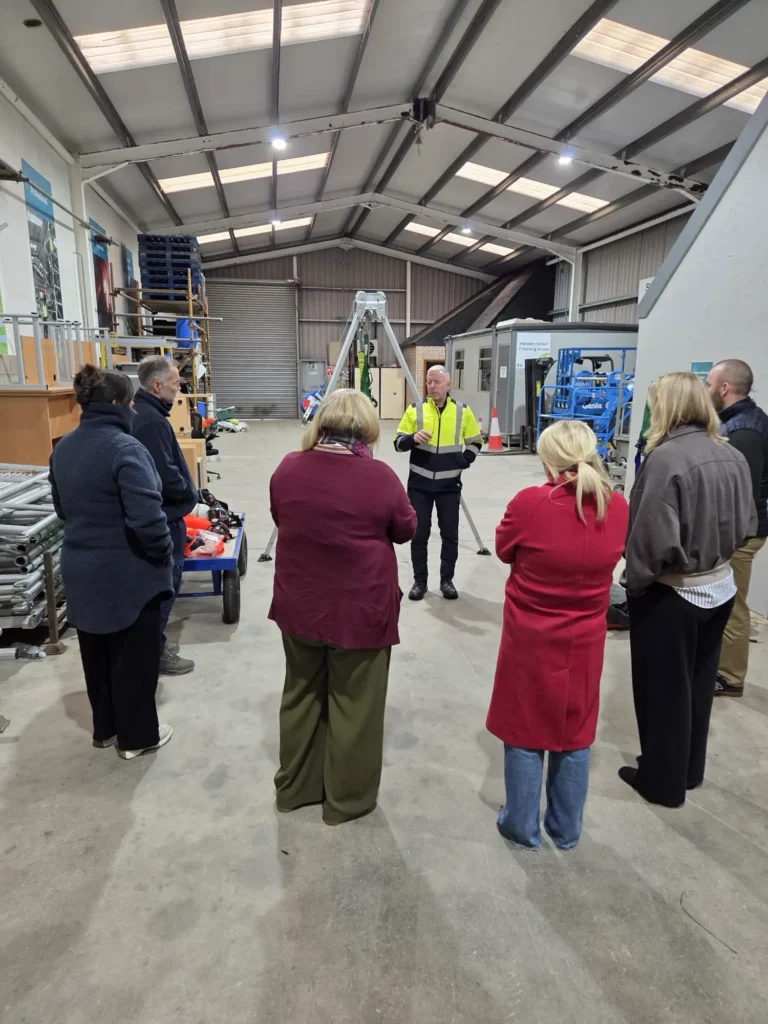
Our instructors took delegates through:
- Hazards and risk management: how to recognise a confined space and assess what could go wrong inside it
- Legal duties and safe systems of work: permits to work, gas monitoring, isolation and supervision
- PPE and safety equipment: hands-on demonstrations of the kit that keeps entrants alive, from gas detectors to escape breathing apparatus and retrieval systems
- Rescue planning and emergency response: why the rescue plan has to be in place before entry, not after something goes wrong
What happened on the morning
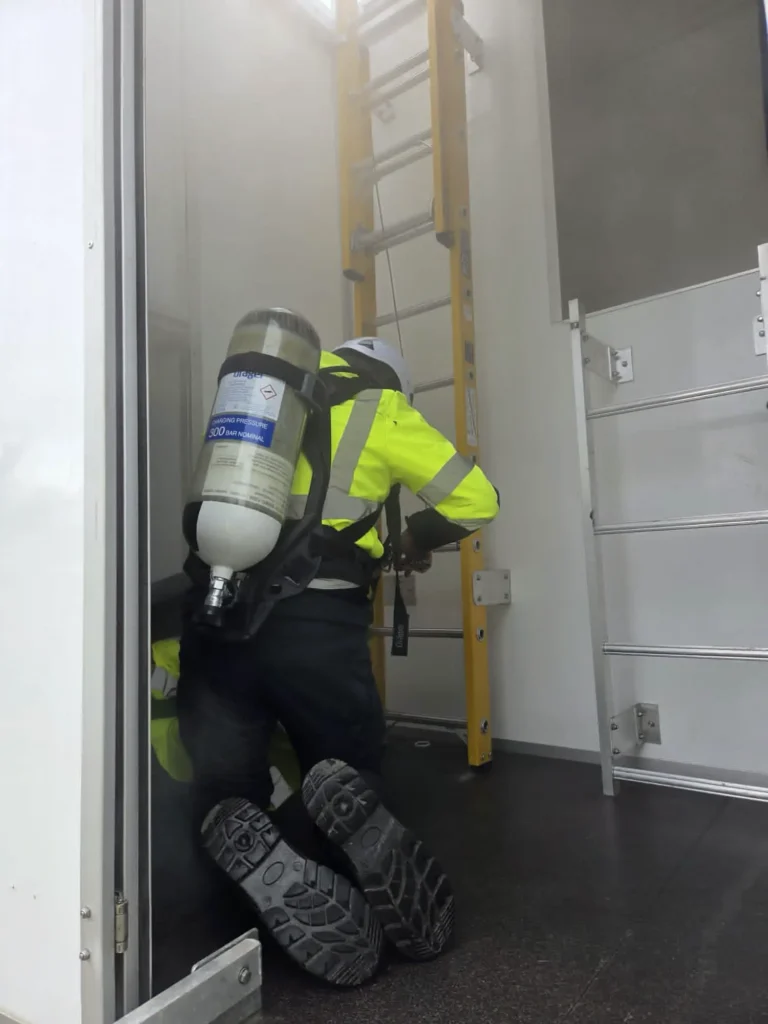
The highlight of the morning was our mobile confined space training unit. Delegates watched realistic training exercises carried out inside the unit and saw first-hand the skills and procedures needed to enter, work in and escape from a confined space safely.
The same unit can come to your site anywhere on the island of Ireland, so your team trains on your premises with no travel and less downtime.
Key takeaways
- Avoid entry where you can. The safest confined space entry is the one that doesn’t need to happen.
- Plan the rescue before the entry. If your plan is “call the emergency services”, it isn’t a plan.
- Competence comes from practice. Classroom learning matters, but realistic practical training is what builds confidence under pressure.
- The right equipment, used properly. PPE only protects people who have been trained to check it, fit it and use it.
Missed the event? Here's how to get your team trained
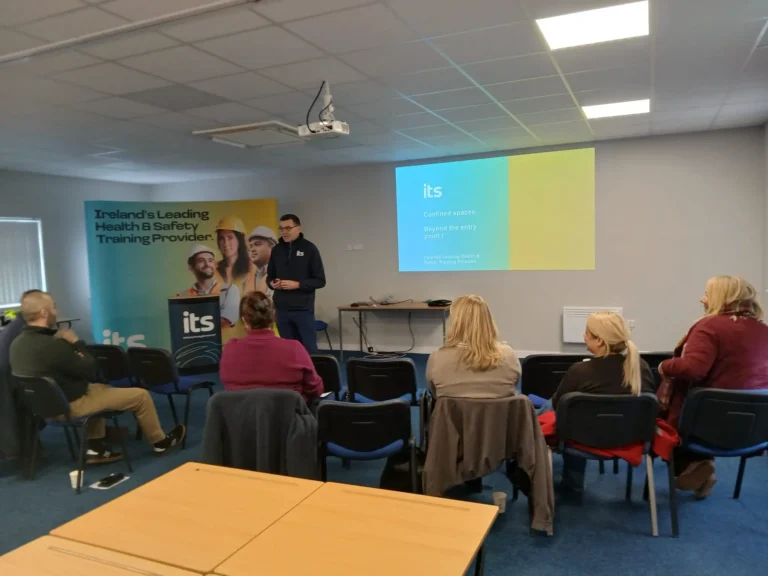
Book a confined space course at our Dublin or Portadown centre
Bring the mobile unit to your site for group training.
Talk to our team about the right level of training for your work
Portadown: 028 3839 8700 · Dublin: 01 891 6105